
Accurate diagnosis is essential for effective treatment and prevention of chronic complications. We focus on precise symptom identification, physical examination techniques, and diagnostic tools to ensure a comprehensive evaluation.
Recognizing Key Symptoms Of Plantar Fasciitis
Heel Pain Upon First Steps
The hallmark symptom is sharp heel pain experienced during the first steps in the morning or after long periods of rest. This pain typically decreases with movement but may return after extended activity.
Pain After Prolonged Standing or Activity
Patients often report increased discomfort after long durations of standing or walking, particularly on hard surfaces.
Localized Tenderness
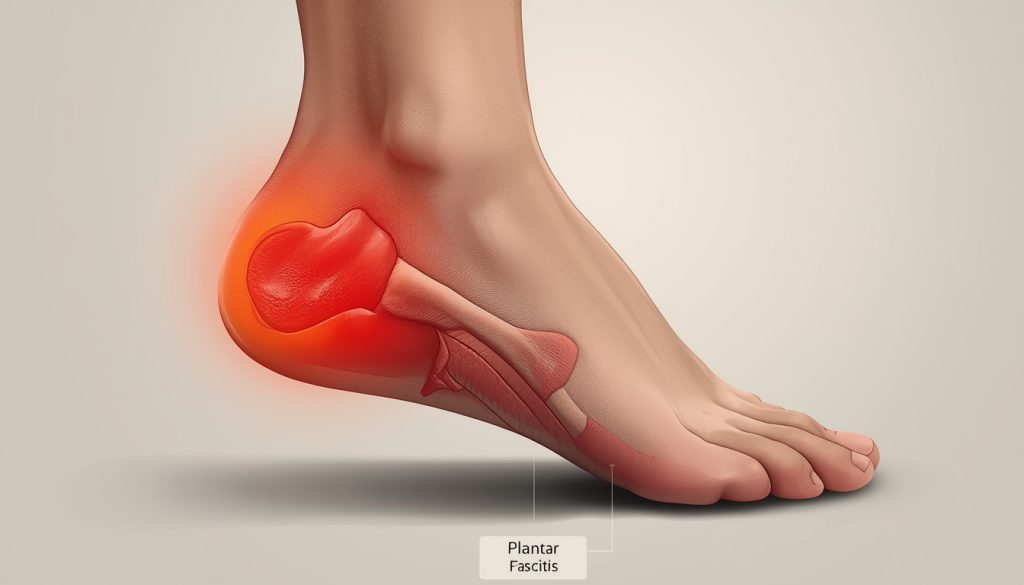
Pain is usually localized at the bottom of the heel, specifically near the medial calcaneal tubercle.
Stiffness in the Foot Arch
A noticeable tightness or stiffness along the arch of the foot may accompany the pain, especially after inactivity.
Step-by-Step Physical Examination Techniques
Palpation of the Plantar Fascia
We begin by applying pressure along the plantar fascia and heel region. A positive indication is sharp pain when pressing on the inner heel.
Windlass Test
The Windlass Test is a highly reliable clinical method:
- The patient sits or stands.
- We dorsiflex (lift upward) the big toe.
- Increased tension on the plantar fascia reproduces pain.
A positive result strongly supports the diagnosis.
Range of Motion Assessment
Limited ankle dorsiflexion due to tight calf muscles (gastrocnemius or soleus) often correlates with plantar fasciitis.
Gait Analysis
Observing walking patterns helps identify abnormal biomechanics, such as overpronation or improper weight distribution.
Differential Diagnosis: Conditions To Rule Out
Accurate diagnosis requires distinguishing plantar fasciitis from other conditions with similar symptoms:
- Heel Spurs: Often coexist but are not always the pain source
- Tarsal Tunnel Syndrome: Causes burning or tingling sensations
- Stress Fractures: Characterized by persistent pain even at rest
- Achilles Tendinitis: Pain located at the back of the heel
- Fat Pad Atrophy: Leads to deep, bruise-like pain
We emphasize clinical differentiation through symptom patterns and targeted testing.
Imaging Techniques For Confirmation
Ultrasound Imaging
Ultrasound is highly effective in detecting:
- Thickening of the plantar fascia (>4 mm)
- Microtears or inflammation
It is cost-effective and widely accessible.
X-Ray Examination
X-rays help rule out:
- Bone abnormalities
- Stress fractures
- Heel spurs
However, they do not directly confirm plantar fasciitis.
Magnetic Resonance Imaging (MRI)
MRI is used in complex or chronic cases to visualize:
- Soft tissue damage
- Severe inflammation
- Alternative diagnoses
At-Home Self-Assessment Techniques
Morning Pain Test
If heel pain is most severe with the first steps after waking, plantar fasciitis is highly likely.
Heel Press Test
Apply firm pressure to the bottom of the heel:
- Sharp, localized pain suggests plantar fascia involvement.
Toe Stretch Test
Pull the toes upward while seated:
- Increased pain along the arch confirms plantar fascia tension.
Activity Response Evaluation
Track how pain changes:
- Improves with mild activity
- Worsens after prolonged use
This pattern is characteristic of plantar fasciitis.
Risk Factors That Support Diagnosis
Identifying contributing factors strengthens diagnostic accuracy:
- Flat feet or high arches
- Obesity or rapid weight gain
- Improper footwear lacking arch support
- Occupations requiring long standing hours
- Running or high-impact sports
- Tight calf muscles or Achilles tendon
We integrate these risk indicators into the overall clinical picture.
Biomechanical Assessment And Foot Structure Analysis
Arch Type Evaluation
- Flat arches (overpronation) increase strain on the plantar fascia
- High arches reduce shock absorption
Foot Alignment
Improper alignment leads to uneven force distribution, accelerating tissue stress.
Muscle Imbalance Detection
Weak intrinsic foot muscles and tight calf muscles contribute significantly to fascia overload.
When To Seek Professional Diagnosis
While self-assessment is useful, we recommend professional evaluation if:
- Pain persists beyond two weeks
- Symptoms worsen despite rest
- Walking becomes difficult
- Swelling or unusual sensations occur
A healthcare provider ensures accurate diagnosis and tailored treatment planning.
Clinical Diagnostic Criteria Summary
We confirm plantar fasciitis based on:
- Localized heel pain
- Pain during first steps after rest
- Positive Windlass Test
- Tenderness on palpation
- Absence of neurological symptoms
Imaging is used when necessary for confirmation or complication assessment.
Common Diagnostic Mistakes To Avoid
- Ignoring early symptoms, leading to chronic inflammation
- Misinterpreting heel spurs as the primary cause
- Overlooking nerve-related conditions
- Relying solely on imaging without clinical evaluation
We emphasize a balanced approach combining symptoms, physical exams, and imaging.
Conclusion: Accurate Diagnosis Leads To Faster Recovery
Properly diagnosing plantar fasciitis requires a systematic evaluation of symptoms, physical tests, and risk factors. By identifying the condition early and distinguishing it from similar disorders, we can initiate effective treatment strategies and prevent long-term complications. A precise diagnosis is the foundation for restoring mobility, reducing pain, and improving overall foot health.
Start applying these diagnostic methods today to identify plantar fasciitis accurately and take the first step toward lasting relief.